Description
Product Description and Features
Automatic Fire Suppression for Electrical Enclosures
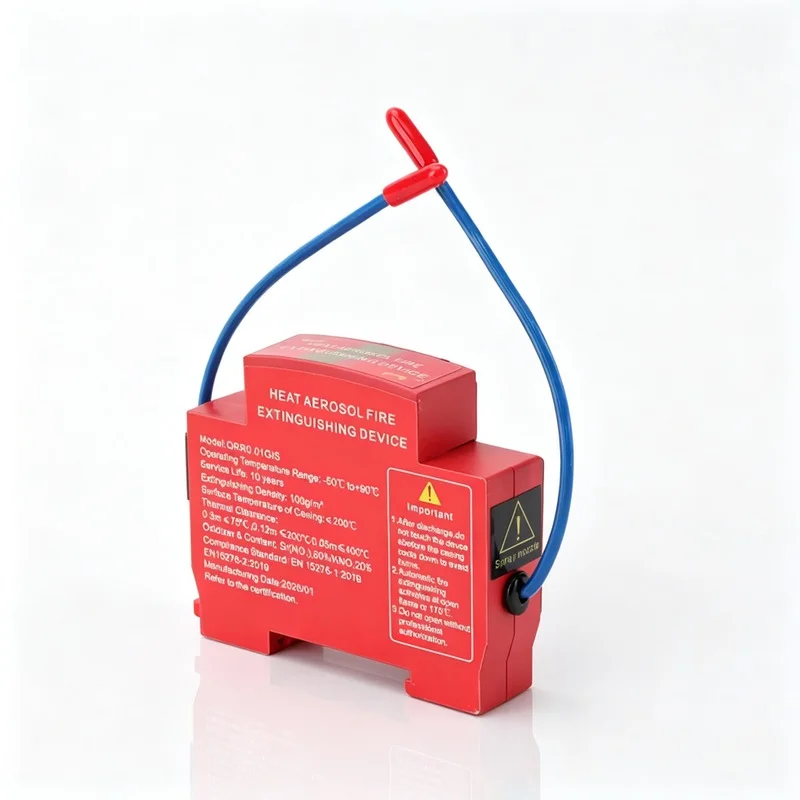
The Heat Aerosol Fire Extinguishing Device is a compact automatic fire suppression solution designed for electrical cabinets, photovoltaic combiner boxes, power distribution panels and other enclosed electrical equipment.
Installed close to components with a higher risk of overheating, the device detects abnormal heat or an open flame and automatically releases a condensed aerosol extinguishing agent. It helps control a developing fire inside the enclosure before it spreads to nearby cables, equipment or cabinet sections.
The self-contained structure does not require an external power supply, fire alarm controller, pressurized cylinder or complicated pipe network. This makes the device suitable for both new electrical equipment and retrofit fire-protection projects.
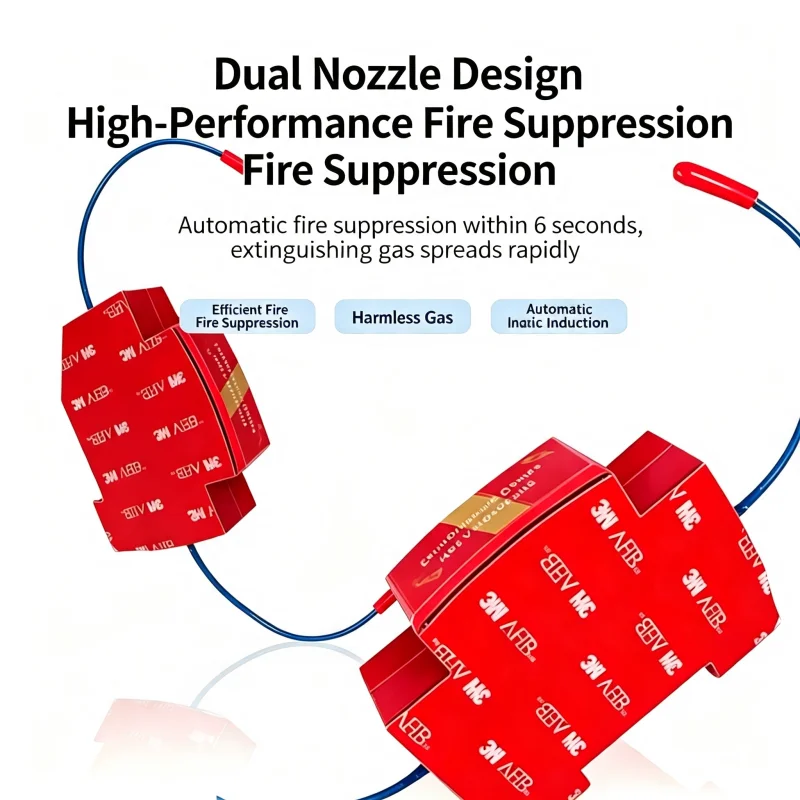
Dual Thermal Nozzle Design
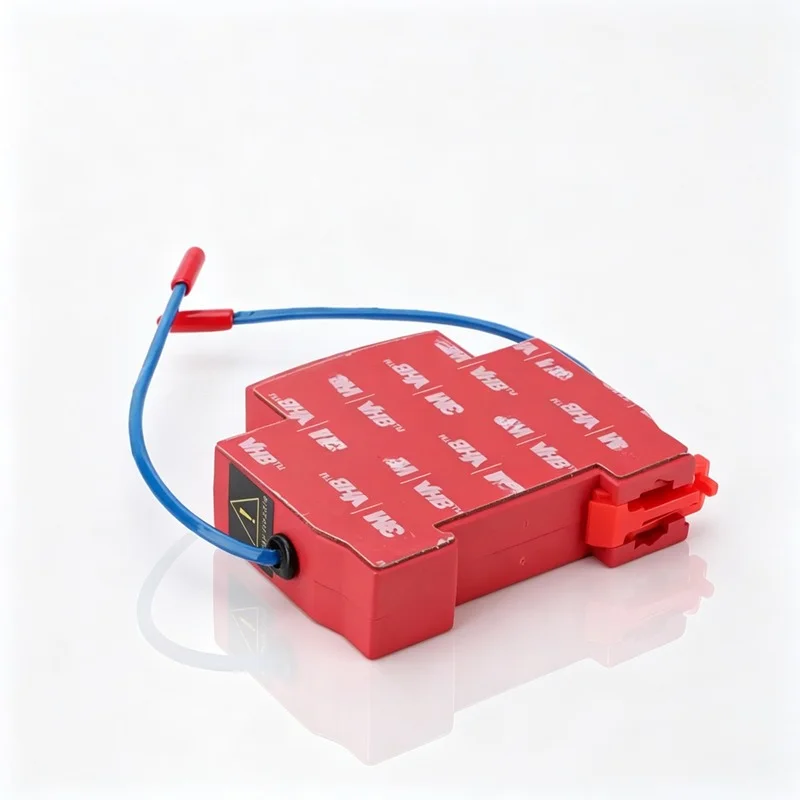
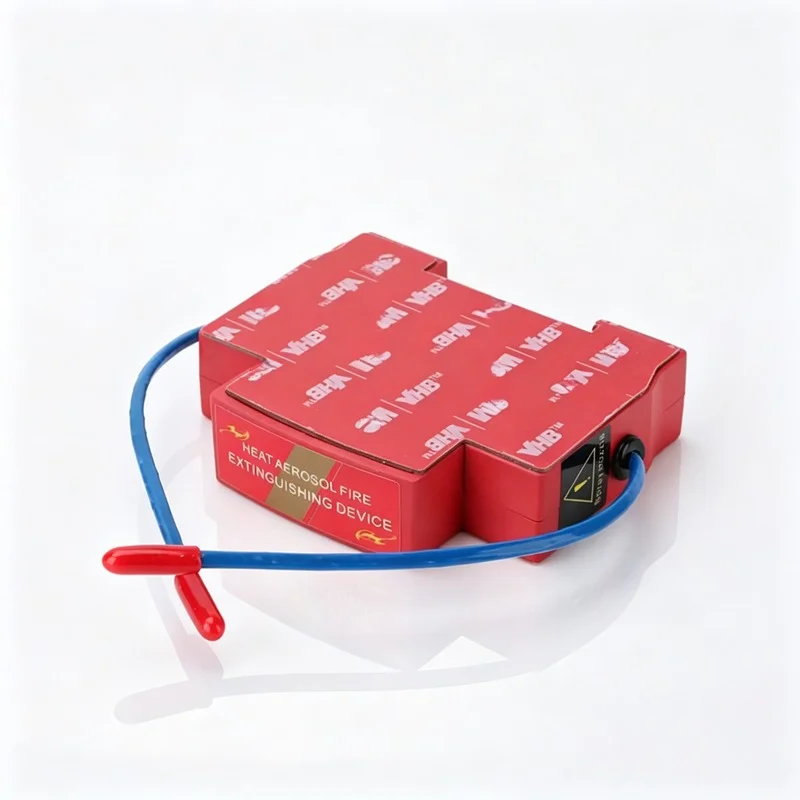
The Heat Aerosol Fire Extinguishing Device is equipped with two flexible thermal nozzles. The nozzles can be positioned close to circuit breakers, terminals, cable joints, busbars, power modules or other potential ignition points.
Compared with a single fixed detection point, the dual-nozzle configuration provides more flexible coverage inside electrical enclosures. When the activation condition is reached, the device automatically begins the fire suppression process.
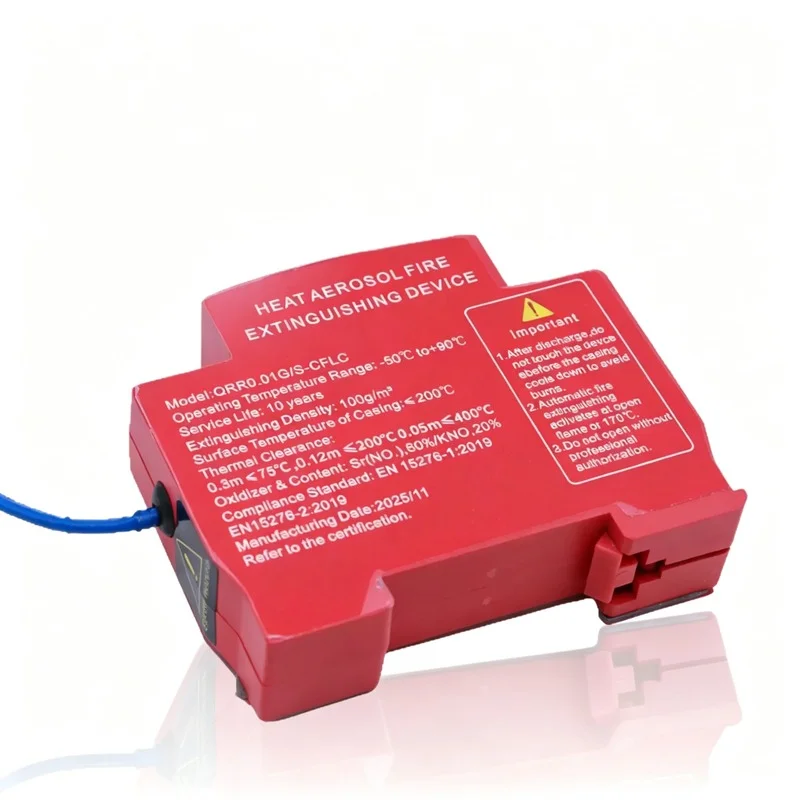
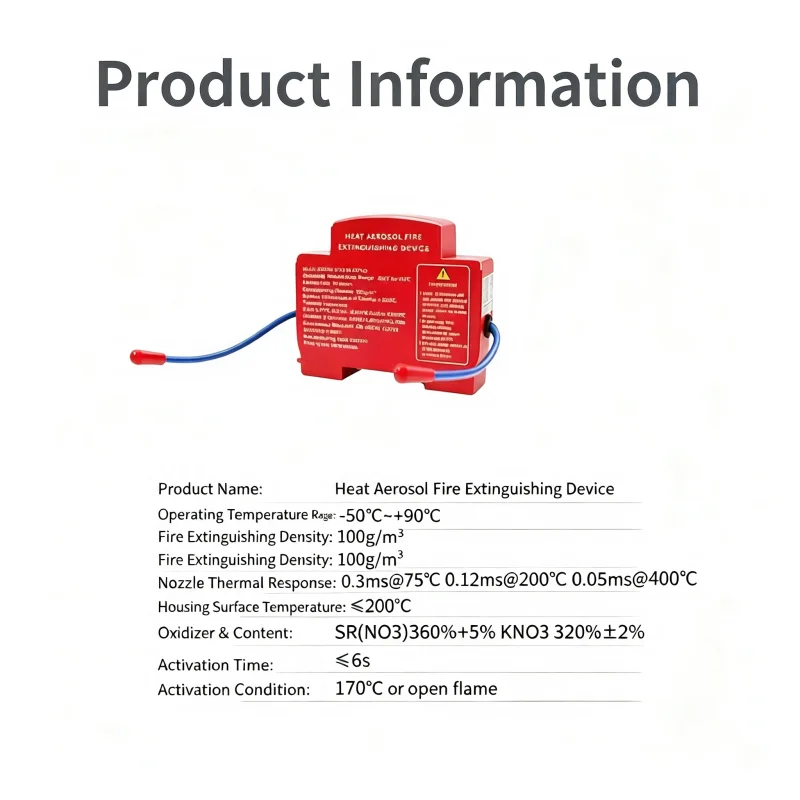
According to the supplied specifications, activation occurs at 170°C or through direct exposure to an open flame. The device completes activation within six seconds, enabling a rapid response to abnormal heat and early-stage fire conditions.
Compact Condensed Aerosol Technology
After activation, the device releases condensed aerosol into the protected enclosure. The aerosol spreads through the available internal space and helps interrupt the combustion process.
The specified fire-extinguishing density is 100 g/m³. Product selection should therefore be based on the net internal volume of the enclosure, rather than the external cabinet dimensions alone.
Ventilation openings, internal partitions, component density and cable-entry gaps should also be considered when determining the required aerosol capacity. Larger cabinets or separated compartments may require multiple devices.
No External Power Required
The Heat Aerosol Fire Extinguishing Device operates through thermal activation and does not rely on an external power supply. This allows the device to remain available even if the protected electrical circuit loses power during a fault.
The independent activation design also simplifies installation because no signal wiring, control module or separate detection circuit is required.
Suitable Applications
The Heat Aerosol Fire Extinguishing Device is suitable for localized fire suppression in:
- Photovoltaic combiner boxes
- Electrical distribution boxes
- Industrial control cabinets
- Battery and energy-storage cabinets
- Communication equipment cabinets
- Charging equipment enclosures
- Automation control panels
- Small machinery enclosures
The device is intended for enclosed or substantially enclosed spaces. It should be used as part of an appropriate fire-safety design and should not replace a building fire alarm or legally required fire-protection system.
Technical Specifications
| Parameter | Specification |
|---|---|
| Product Name | Heat Aerosol Fire Extinguishing Device |
| Product Type | Automatic aerosol fire suppression device |
| Extinguishing Medium | Condensed aerosol |
| Detection Method | Dual thermal nozzles |
| Activation Condition | 170°C or open flame |
| Activation Time | ≤6 seconds |
| Operating Temperature | -50°C to +90°C |
| Extinguishing Density | 100 g/m³ |
| Housing Surface Temperature | ≤200°C |
| External Power Supply | Not required |
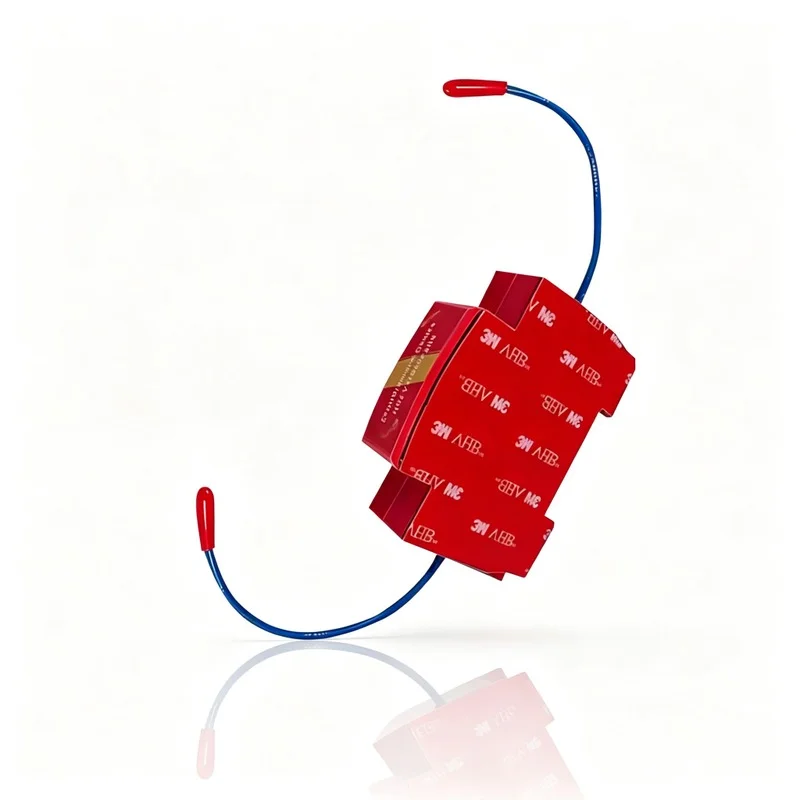
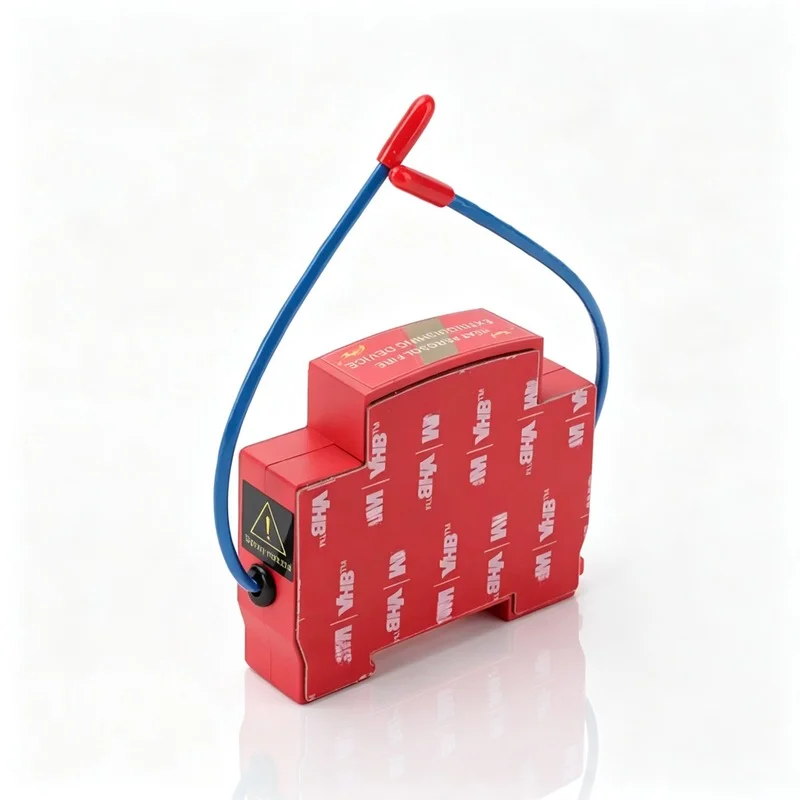
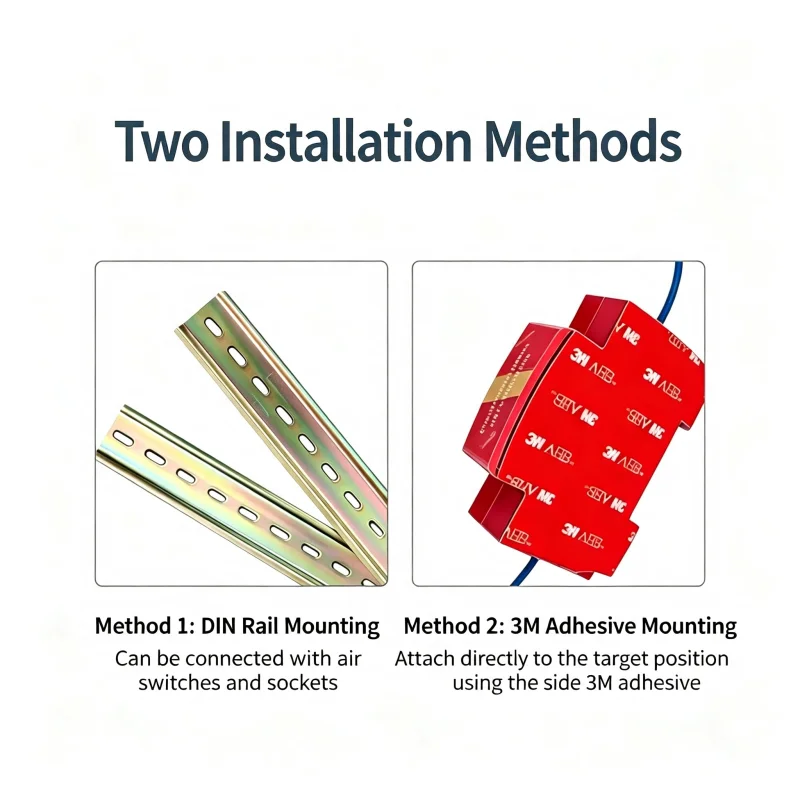
| Installation Method | DIN rail / 3M adhesive mounting |
| Installation Position | Inside the protected enclosure |
| Typical Applications | Electrical cabinets, PV combiner boxes and control panels |
Key Product Advantages
- Automatic heat and flame activation
- Dual thermal nozzles for flexible positioning
- Rapid activation within six seconds
- No external power supply required
- Compact design for limited cabinet space
- DIN rail and adhesive mounting options
- Suitable for new installations and retrofits
- Centralized protection for enclosed electrical equipment
Installation Guidelines
- Calculate the net internal volume of the protected enclosure.
- Select the correct aerosol capacity using the specified extinguishing density of 100 g/m³.
- Position the device close to the main potential ignition points.
- Place the two thermal nozzles near circuit breakers, terminals, cable joints or power modules.
- Keep the aerosol discharge path unobstructed.
- Use DIN rail mounting where a suitable rail and sufficient space are available.
- For adhesive mounting, clean and dry the installation surface before attaching the device.
- Do not install the device where water, oil, dust or vibration could weaken the adhesive mounting.
- Do not excessively bend, cut or cover the thermal nozzle cables.
- Replace the complete device after activation or discharge.
FAQ
How does the Heat Aerosol Fire Extinguishing Device work?
The device detects abnormal heat or direct flame through its thermal nozzles. Once the activation condition is reached, it releases condensed aerosol into the enclosure to suppress the developing fire.
Does the device require electricity?
No. The Heat Aerosol Fire Extinguishing Device uses automatic thermal activation and does not require an external power supply or control panel.
Can it be installed inside a PV combiner box?
Yes. Its compact structure is suitable for photovoltaic combiner boxes, provided that the selected extinguishing capacity matches the internal volume and installation conditions.
How should I select the appropriate capacity?
Calculate the net protected volume and select the aerosol quantity according to the specified density of 100 g/m³. Internal partitions and ventilation openings should also be considered.
What is the activation temperature?
According to the supplied product information, the activation condition is 170°C or direct exposure to an open flame.
Request Quote
Tell us your specifications, quantity, or application scenario and we will reply with a tailored quote.